
Identify Root Causes Instantly
Analyze case history, symptoms, and resolution patterns using GPTfy's AI-powered case intelligence inside Salesforce
The same issues keep coming back. Nobody knows why.
Support teams resolve symptoms but never reach the root cause. Without cross-case analysis, the same problems resurface week after week - driving escalations and eroding customer trust.
Issues resurface because root causes go unresolved
Agents close tickets by fixing symptoms, but the underlying cause remains. The same failure mode generates new cases week after week - each one treated as a fresh problem instead of a pattern.
“It enables Salesforce professionals like me to leverage AI of my choice in a declarative manner. Case summarization, classification, routing, personalized email response generation.”
- Sury Ramamurthy, Technical Architect, Innolake Corporation
Build prompts with Prompt BuilderSpent manually investigating root causes per escalation
Senior agents and managers spend hours reading through case comments, email threads, and internal notes to connect symptoms across related tickets. Without structured analysis, investigations rely on tribal knowledge and guesswork.
“Finally an easy to use AI solution which would not only help you manage daily tasks efficiently but also give you the power to interpret large datasets to make business decisions effectively.”
- Ashwin Kotian, AVP, ICICI Lombard
Connect your model via BYOM ArchitectureHide patterns no human can detect manually
When symptoms span hundreds or thousands of cases across products and time periods, the connections are invisible in standard Salesforce views. Agents treat each ticket in isolation, missing the systemic issue behind all of them.
“The implementation was smooth and the results exceeded expectations.”
- Rishi Golyan, Salesforce Consultant, Algocirrus
Secure this with Security LayerEnd Manual Troubleshooting
Complex cases create endless investigation cycles
Support teams spend hours reading through scattered case comments, email threads, and internal notes trying to connect symptoms to underlying causes. Without a structured analysis tool, agents rely on tribal knowledge, and new team members miss patterns that experienced agents would catch in minutes.
Missing connections delay customer resolutions
When symptoms span multiple cases, products, or time periods, the connections between them are invisible in standard Salesforce views. Agents treat each ticket in isolation, missing the systemic issue that caused all of them, resulting in repeat escalations and frustrated customers.
AI Delivers Root Analysis
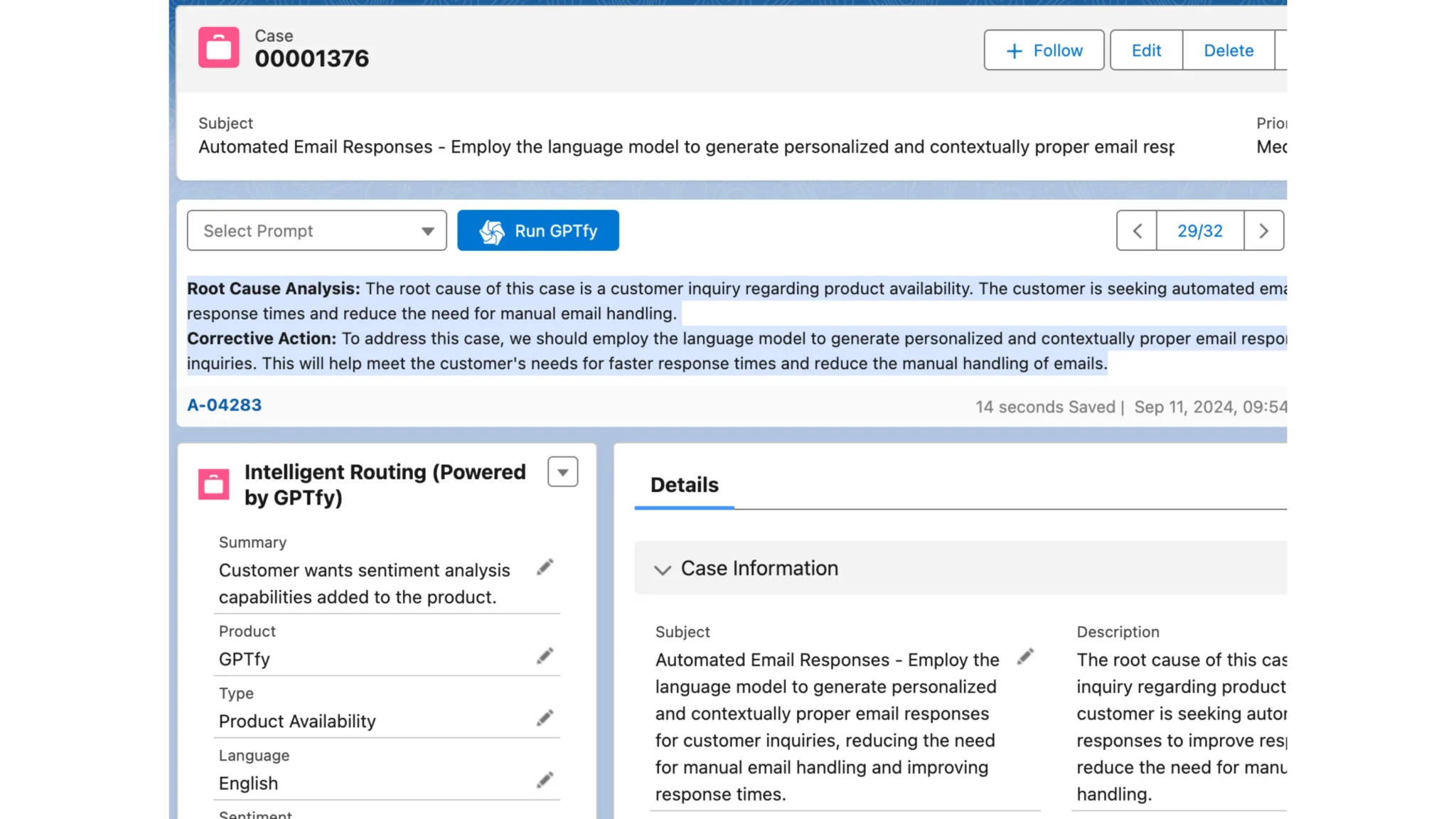
Automated investigation through Data Context Mapping replaces manual case parsing
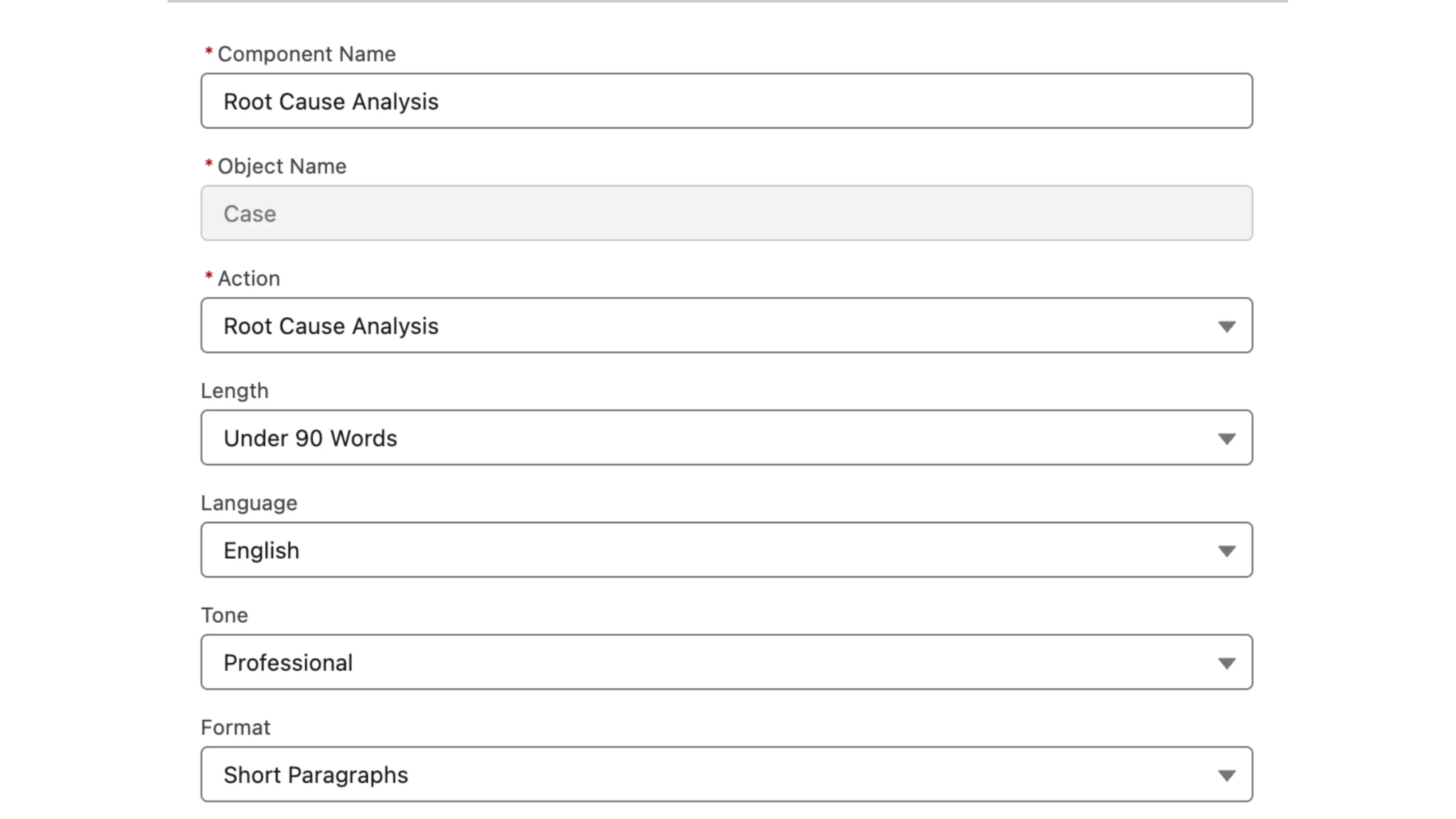
GPTfy's Data Context Mapping feeds the full case history (descriptions, comments, email threads, and related case references) into the AI model. The model analyzes symptom patterns, identifies the most probable root cause, and generates a structured report with evidence citations from your actual case data.
Secure processing via PII masking maintains compliance standards
GPTfy's PII masking engine strips customer identifiers, account numbers, and sensitive details before any case data reaches the AI model. All processing flows through Salesforce Named Credentials with full audit logging, maintaining HIPAA, GDPR, and SOC 2 compliance throughout the analysis workflow.
Systematic Issue Resolution
Turn hours of investigation into seconds with structured reports
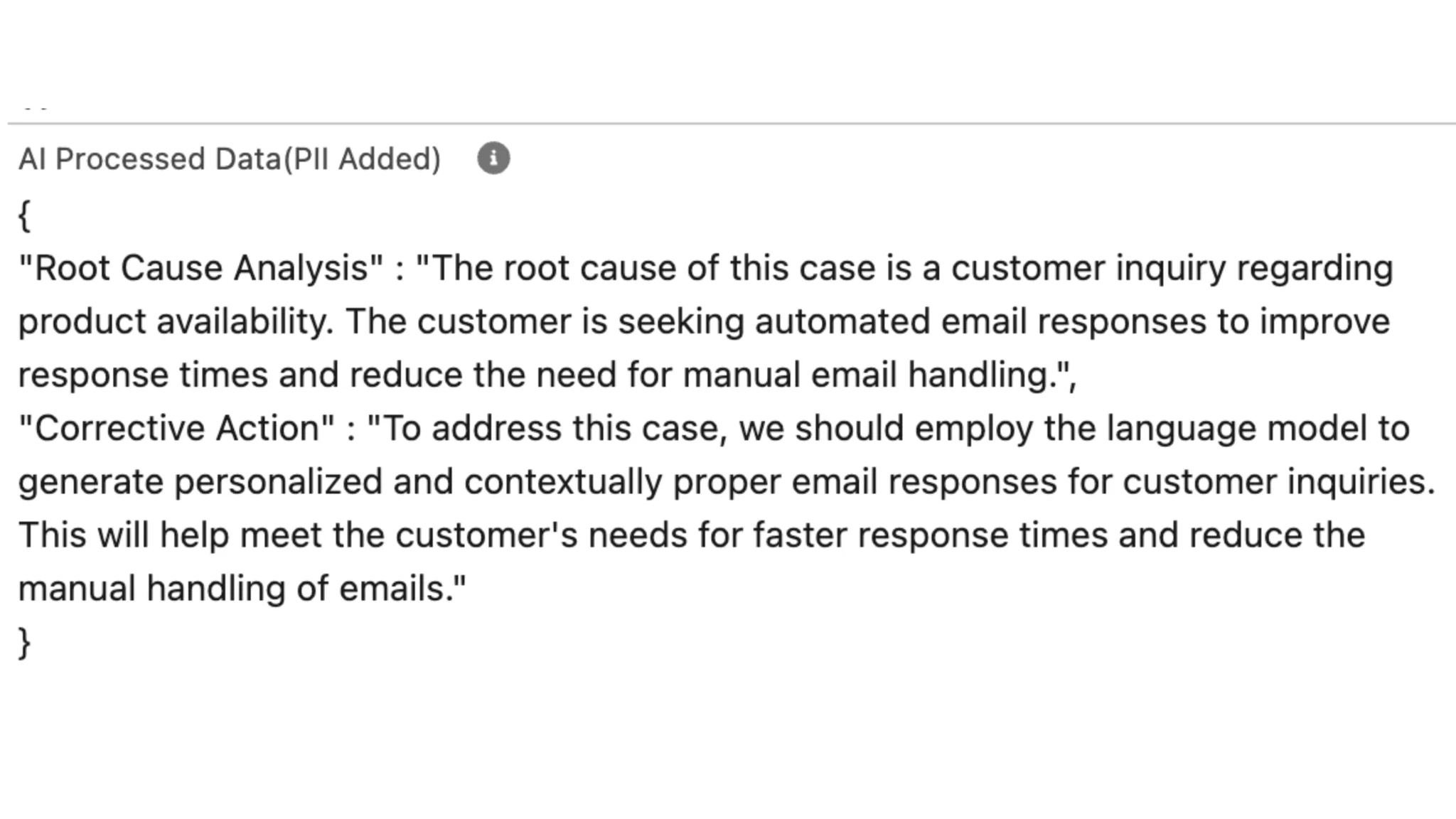
The AI generates a structured root cause report with probable cause, contributing factors, recommended corrective actions, and prevention steps. Each recommendation is grounded in evidence from the case data (specific comments, dates, and interaction patterns), so agents can validate the analysis before acting.
Faster resolutions improve satisfaction using customizable analysis frameworks
When agents arrive at the root cause in minutes instead of hours, first-contact resolution rates improve and escalation volumes drop. The Prompt Builder lets support ops customize the analysis framework: define product categories, known issue patterns, and resolution templates that match your team's troubleshooting methodology.
Why Choose Root Cause Analysis
Faster Root Cause Identification
AI analyzes case histories, comments, and resolution patterns in seconds - replacing the hours agents spend manually connecting symptoms across scattered records and tribal knowledge.
Pattern Detection Across Cases
Cross-case analysis surfaces systemic issues that span multiple tickets, products, and time periods - catching recurring patterns that individual agents reviewing cases in isolation would miss.
Proactive Issue Prevention
Structured root cause reports with contributing factors and prevention steps let teams fix underlying problems before they generate more tickets - shifting support from reactive firefighting to systematic improvement.
Powerful Capabilities
Cross-Case Pattern Analysis
Data Context Mapping feeds related case references, child records, and historical resolution data into the AI model to identify systemic issues that span multiple tickets and product areas.
Automated Categorization
The AI classifies root causes by type - product defect, process gap, training need, or documentation issue - and tags contributing factors so teams can prioritize fixes by category and frequency.
Trend Detection
Pattern analysis across case timelines surfaces emerging issues before they become widespread. The model identifies upticks in symptom frequency and correlates them with recent changes or releases.
Resolution Tracking
Each root cause report includes recommended corrective actions with evidence citations from actual case data - specific comments, dates, and interaction patterns agents can validate before acting.
Key Takeaways
- Data Context Mapping feeds full case history and related case references into the model
- AI generates structured reports with probable cause and evidence-backed corrective actions
- Cross-case pattern analysis detects systemic issues spanning multiple products or periods
- PII masking strips customer identifiers before case data reaches the AI model
- Prompt Builder customizes analysis frameworks to match your troubleshooting methodology
Frequently Asked Questions
GPTfy's Data Context Mapping feeds the full case history (descriptions, comments, email threads, and related records) into the AI model. The model analyzes symptom patterns, correlates them across cases, and generates a structured report identifying the most probable root cause with evidence citations.
Yes. When Data Context Mapping includes related case references and child records, the AI can identify systemic issues that span multiple tickets, products, or time periods. This cross-case analysis surfaces patterns that individual agents miss when reviewing cases in isolation.
GPTfy's Security Layer strips customer identifiers, account numbers, and sensitive details before case data reaches any AI model. All processing flows through Salesforce Named Credentials with full audit logging, maintaining HIPAA, GDPR, and SOC 2 compliance.
Yes. The Prompt Builder lets support operations define product categories, known issue patterns, and resolution templates. This means the root cause analysis follows your team's troubleshooting methodology rather than a generic framework.
GPTfy installs as a Salesforce managed package in minutes. Configuring the Data Context Mapping to read case fields and setting up an analysis template in the Prompt Builder typically takes one to two hours. Most support teams are running AI-powered root cause analysis within a day of installation.
Yes. GPTfy's Data Context Mapping can include related case references, product fields, and custom objects across your org. The AI correlates symptoms across product lines and business units to identify systemic issues that siloed teams would miss when reviewing their own case queues independently.
See Root Cause Analysis on Your Cases
Book a demo to see how GPTfy identifies root causes from your Salesforce case data in seconds.
Related Use Cases
Case Summarization
Auto-generate concise case summaries from full conversation history.
Case Resolution
AI-recommended solutions based on similar resolved cases.
Sentiment Journey
Track customer sentiment across every interaction over time.
Knowledge Article Management
Auto-generate knowledge articles from resolved cases.
AI for Service
All AI-powered service use cases for Salesforce.